
Author: Yingxuan Zhao
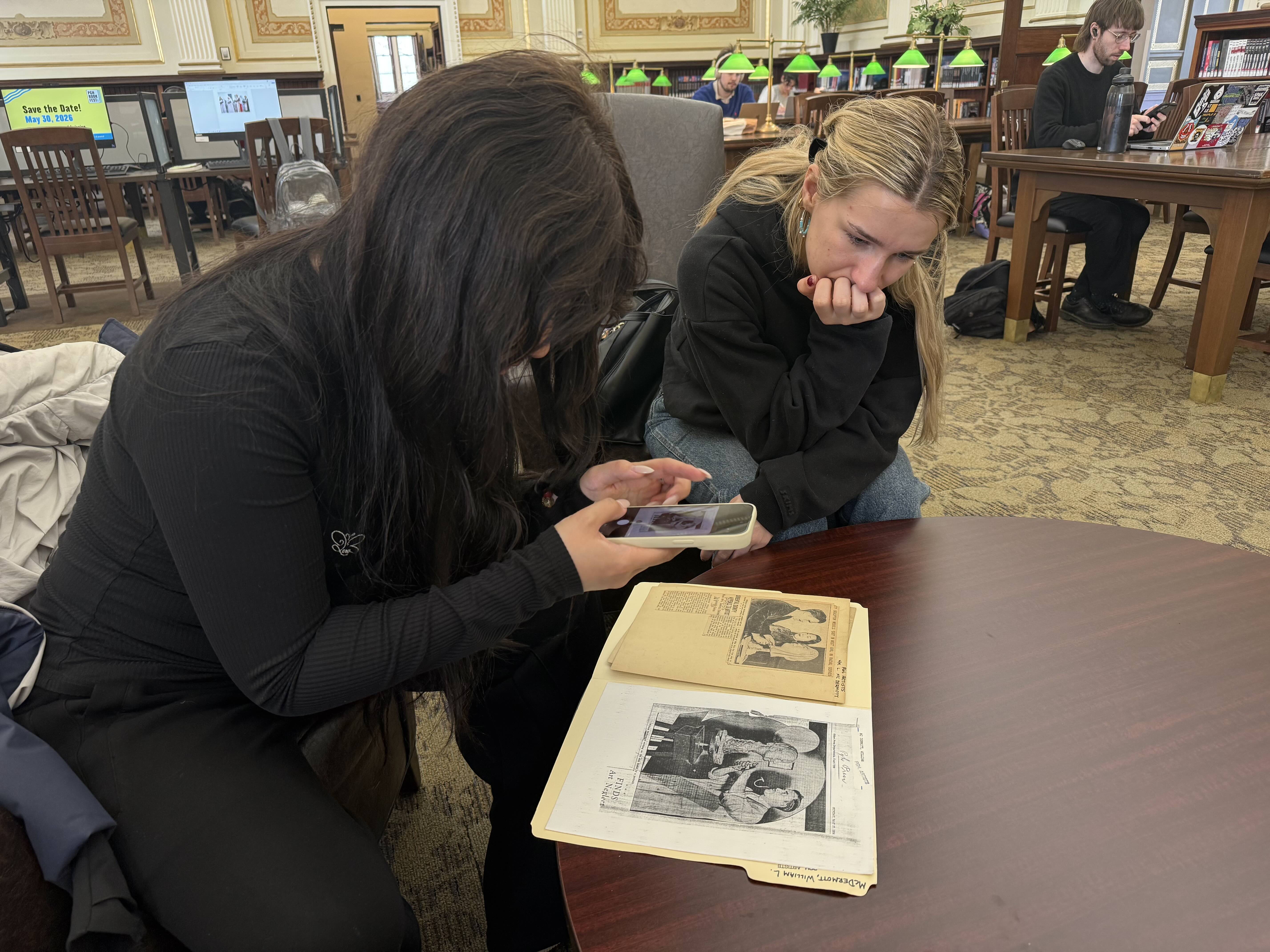
At first, this project really just felt like working through a spreadsheet. Rows of names, dates, degrees, and dissertation titles – starting in the 1930s and moving forward year by year. Some entries were detailed, others were incomplete, and a lot of them just blended and confused together. It was easy to focus on cleaning the data instead of thinking about the people behind it.
This was part of my internship in the Department of History of Art and Architecture at the University of Pittsburgh, where I have been working with Alex Taylor and Cassidy Hench to compile and verify graduate and PhD student records for preparing the department's upcoming centennial. Most of my work involves cross-checking sources, like PittCat, old booklets, and other archives, to make sure that names, graduation dates, and degrees actually match. It sounds technical, even a little repetitive, and at first, it was. However, that feeling changed when I started to explore the stories behind those names.
One of them was Allen Hugh Clarke. His name, like the other ones, was just a line in the spreadsheet. Like many of the department’s early graduates, Clarke was a practicing artist. Born in Tarentum, he came to Pitt with a degree from Carnegie Tech and, in 1948, completed an MA dissertation with the title “The influence of the primitive on modern art.” In the 1950s, Clarke was teaching and exhibiting New York, including a 1954 exhibition in which his work was seen alongside fellow Pittsbugher Andy Warhol.
Another name that I kept thinking about was Virginia Mae Allen. She graduated from Pitt with her MA in 1967 with a dissertation titled “Mosaic decoration of the narthex of the katholikon of Hosios Lukas.” She went on to complete a PhD at Boston University and worked as a professor at the Massachusetts College of Art and Design for 27 years. She also painted her whole life and, especially in her later years, exhibited her colorful, light-filled paintings widely in Massachusetts and beyond.
Looking at these two names together, what interested me most was that their paths were so different, although they all started from the same place – the University of Pittsburgh was a key starting point for an artistic career. Working with this spreadsheet, I expected to organize information, but during this process, it stopped feeling just like data. Each row became less like a record and more like a fragment of life, in which something is partial, something is uneven, but all of them are still meaningful. And now, when I scroll through the spreadsheet, I do not just see names blending anymore, I see the stories that behind them.