
Author: Alivia Pierce
Nantucket, Massachusetts is often presented as a picturesque landscape of maritime charm and coastal leisure. This image is deeply intertwined with the island’s contemporary connections with wealth and exclusivity. For many visitors, it evokes a particular kind of American dream - weathered gray shingles, sailboats in the harbor, manicured gardens, expensive summer homes, and an atmosphere of ‘quiet luxury’ that can make the environment feel almost removed from the histories that have long existed here. The island’s character is, in many ways, part of its attraction. But asking whose history is made visible within that character, and whose is obscured, changes how the landscape can be understood.
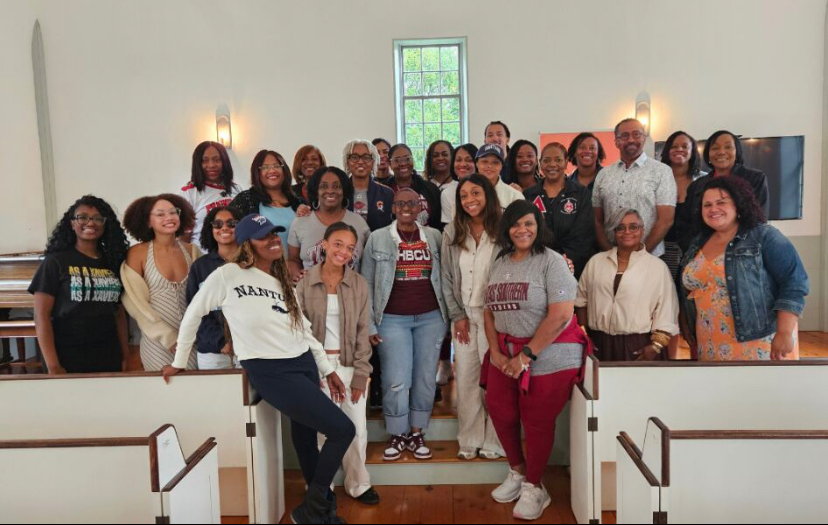
As an Interpretive Guide at the Museum of African American History (MAAH), I have spent the summer confronting that tension directly on Nantucket. I guided visitors through the African Meeting House, dating to 1824, and the Seneca Boston-Florence Higginbotham House, built in 1774. The African Meeting House has long served the historically Black community of New Guinea as a center of worship, education, abolitionist organizing, and public discussion. Its history is connected to figures such as Frederick Douglass, who often visited the community and presumably spoke there. The space is connected to the broader networks of activism that link Nantucket to national struggles of slavery, citizenship, and freedom. The building’s continued presence demonstrates a Black history that is often overlooked within the island’s more visible narrative of white exclusivity and elitism.
The Seneca Boston-Florence Higginbotham House is associated with generations of Black Nantucketers who established families, purchased property, and created lasting ties to the island. Seneca Boston, a formerly enslaved man, purchased the land and built this house. It would remain in the Boston family until about 1919, when Florence Higginbotham would purchase the property. The Higginbotham family owned the house until 2001, when it would be sold to MAAH. This structure’s history reflects the significance of family memory, economic stability, and intergenerational belonging. The two buildings offer a different entry point into Nantucket’s story: one centered on Black community, self-determination, faith, and family. They challenge the assumption that the island’s history is grounded solely in colonial settlement, maritime commerce, or its reputation as an exclusive summer destination. Standing inside these spaces and learning their layered histories, I began to understand preservation as a way of making visible the memories that have shaped a place, which are not always reflected in its dominant narratives. The architecture provides the physical evidence, but the stories carried within and around it reveals how communities have remembered, claimed, and sustained their presence over time.
My time at MAAH has helped me begin to answer a question that has followed me throughout my academic career: How do we preserve Black presence, not only in the historical record, but in the places, memories, and communities that continue to carry it forward? Every tour became an opportunity to consider and investigate historical visibility, particularly between buildings and neighborhoods, archival evidence and lived experience, and documentation and cultural memory. I came to see interpretation as a form of preservation in its own right: a way of bridging histories that have been fragmented with landscape and public consciousness. With this in mind, I encouraged visitors to recognize how Black history lives in the spaces, hearts, minds, and memories of Nantucket.
This experience has further deepened my interest in the ways Black Diasporic histories are constructed, preserved, and represented. MAAH has taught me to consider how residents of the New Guinea community have documented their own history through place, storytelling, and memory. Looking at a landscape so often presented through wealth, leisure, and exclusivity involves recognizing the Black history embedded within it. The African Meeting House and Seneca Boston-Florence Higginbotham House are evidence of generations of people who claimed space, built institutions, created community, and insisted upon their belonging. My role as an Interpretive Guide has shown me that public history can intervene in the stories places tell about themselves by making the landscape and narrative more complete. For me, that is part of the work that cultural heritage involves: preserving the traces of underrepresented stories, which includes memory, meaning, and recognition within the environments those before us have helped build and shape.
Alivia Pierce was a Summer Intern at the Museum of African American History, supported by a Tomayko Foundation Summer Internship Grant.