
Author: Audrey Carasoni
Paintings, furniture, cars, an entire home and its belongings, plus many more, make up the collection at The Frick Pittsburgh. With over 10,000 items in their collection, each unique and different, caring for this vast collection can be difficult. From large early twentieth-century cars to small, fragmented plaster casts of hands by Augustus Rodin.
These casts are one of the objects that I had the opportunity to get up close and handle as a Collections Intern at The Frick Pittsburgh in Fall of 2025. A large part of managing a collection is not just maintaining the collection and its records, but ensuring these objects are housed safely. As a part of my internship, I learned how to properly house objects to ensure their safety and longevity while they’re on display or in storage. And for these Rodin hands, it meant building something from scratch. Alongside my supervisor, Christina Cichra, the Collections Manager, we built a coroplast pressure-fitted box, with each fragment having its own spot. This helped ensure that the pieces wouldn’t move around, preventing further breakage.
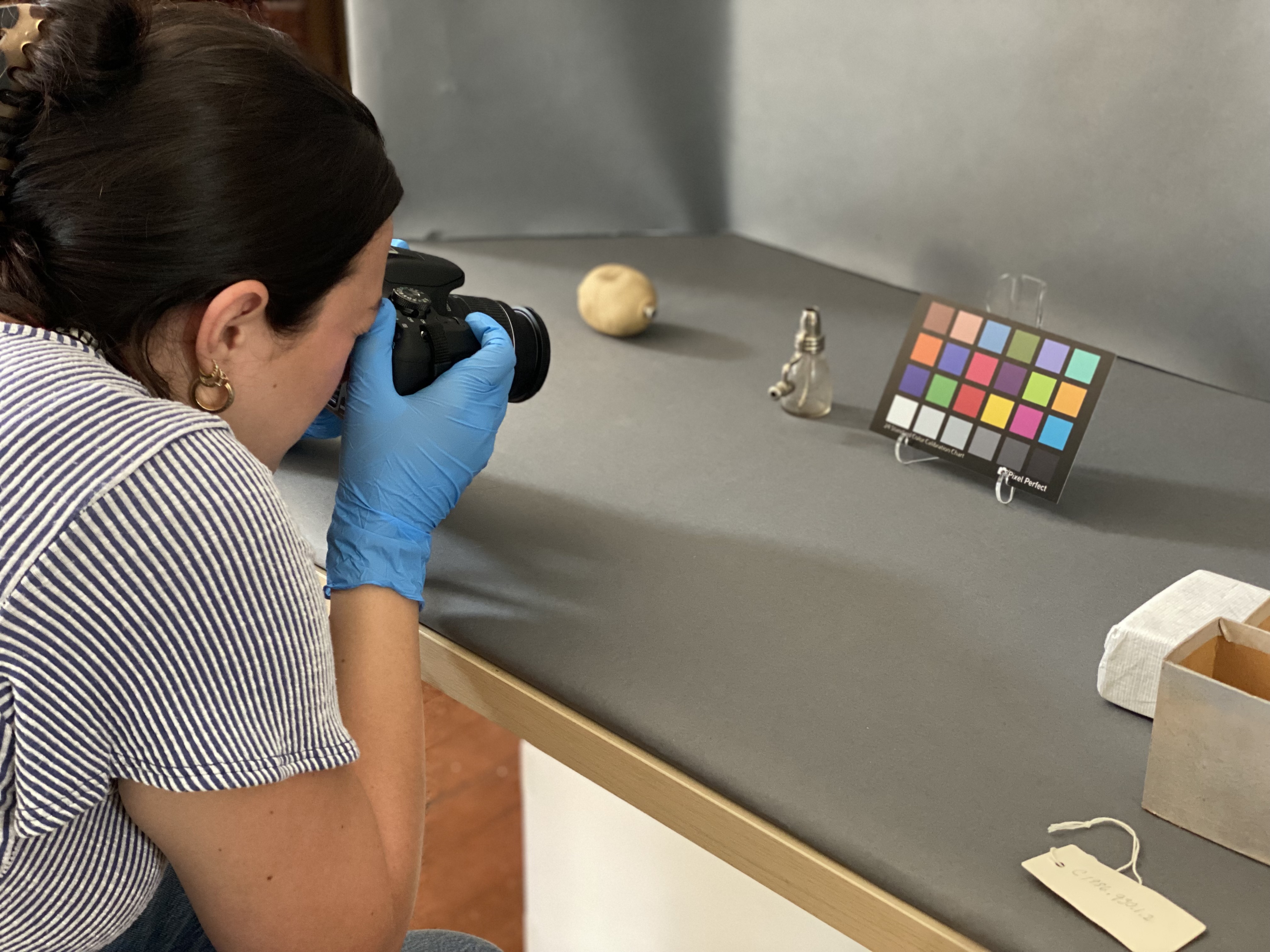
Making these custom boxes is just one part of collection management, and how I spent my time at The Frick Pittsburgh. My overarching project throughout the semester was to help house and document items in the collection, especially the objects that were in the historic home of the Frick family, Clayton. Many of these objects had gone untouched since the home was converted into a historic site in the 1980s, and its contents were accessioned. This entailed photographing objects, transferring paper records and updating them in a collections management software system. As well as the Rodin hands, ensure their safety and longevity. Often this felt like a puzzle. Some objects had two accession numbers, or some had none. Leaving it up to us to put the pieces together. Caring for and maintaining such a large collection can often be a challenge but is also deeply rewarding.
During the first weeks of my internship, I learned how collections management is not just caring for objects in the collection, but also objects that are loaned to the institution. I had the privilege of learning the ins and outs of installing an exhibition and how the objects in it are cared for. I gained this experience when The Frick Pittsburgh opened their new show The Scandinavian Home: Landscape and Lore. This entailed everything from uncrating artworks, condition reports, and ensuring that the works can safely be displayed. This even meant building a stand for one object to safely rest on during the exhibition’s run.
My time as a Collections Intern at The Frick Pittsburgh has taught me things that I would never have had the opportunity to learn in a classroom. It opened my eyes to exactly what it takes to care for a museum collection, especially one so vast and diverse. Every object I handled had its own story, its own history, and to be able to handle and work with these parts of history has been deeply rewarding.