
Author: Eli Barker
The table in front of me was massive, if it could even be called a table. It stretched the entire distance of a room and required a ladder to get to its middle parts due to its width. On my first day at the Kamin Science center, I was in shock. This table was huge and featured an inconceivable amount of detail. It was the table for the Miniature Railroad and Village exhibit, and on it there were four different trains running simultaneously plus more than 50 different moving models and even real water. Looking at it seemed like an impossible task, there was so much to it in so many ways. Understanding every element of this complex exhibit seemed almost impossible. The team at the Kamin Science Center quickly made me feel better. They informed me that as I started to spend time around it, I would eventually pick up more information about the exhibit’s contents. More comforting than this, they let me know that sometimes it was also OK to not know the answer. Many had been working there for years and were still learning about little details and fun facts hidden within the display.
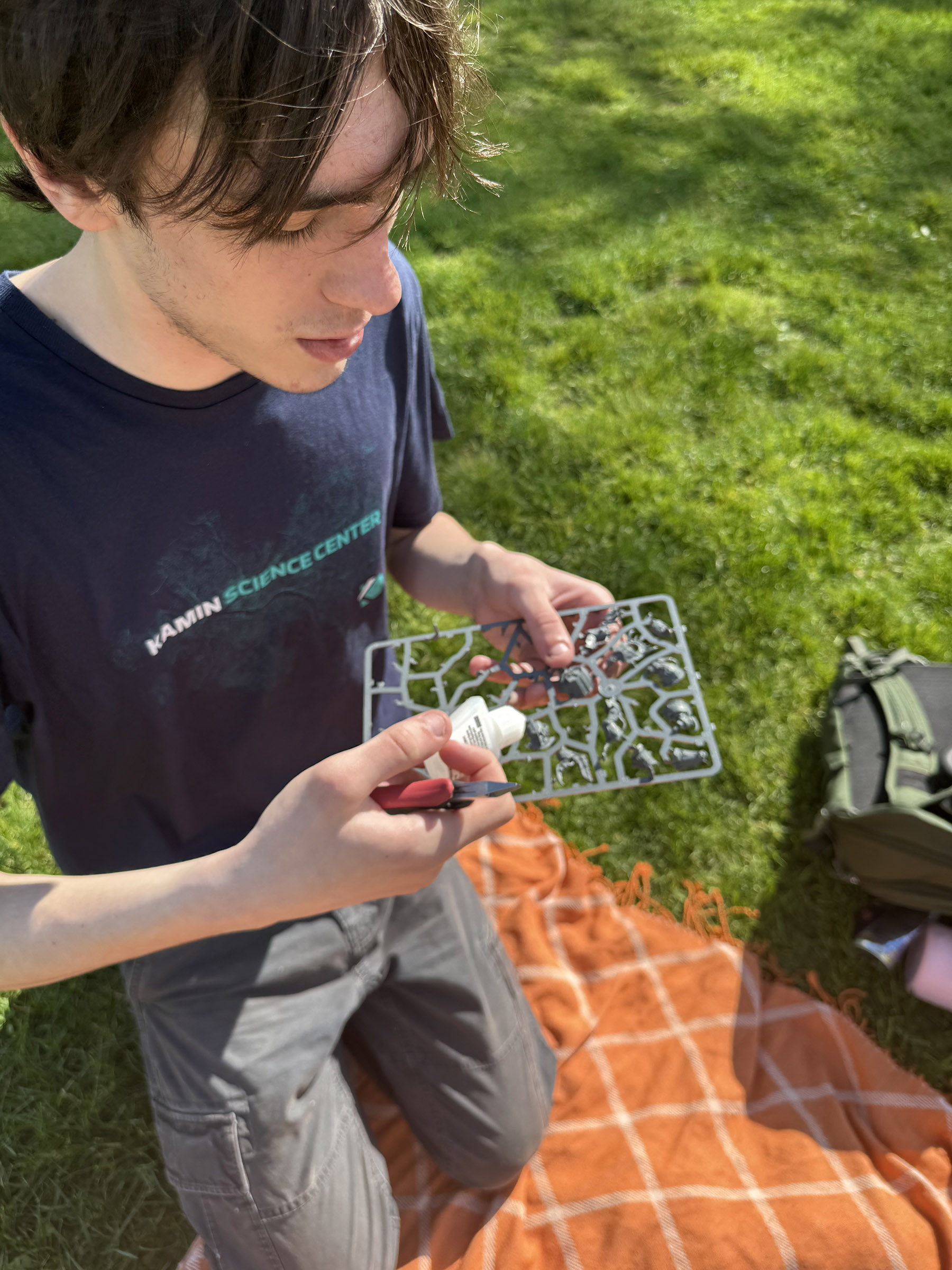
This is when the genius of the MRRV fully hit me. It had been around since 1954 and has been added to nonstop since. The current MRRV that I was looking at was so much more than just a tribute to Western Pennsylvania culture; it was also a testament to the people that lived there. Each new model that was put onto the table was in some way meaningful to the person who put it there. The story behind each of these additions was personal and meaningful and helped add so much to the story of the exhibit. It also helped me realize that the exhibit was a testimony to the people of Pennsylvania. Eventually it was my turn to build and paint a model before adding it to the exhibit. I researched extensively to find a Pittsburgh historical figure that I felt represented both me and PA culture. Ultimately, I chose Josh Gibson, a former professional Baseball player from Pittsburgh. I chose him because his story is one that connected very deeply to me. He was a southerner that moved to Pittsburgh and fell in love with its unique culture and deep history. As I sat and painted my model, I reflected on how many times, I had seen PA residents both old and young admiring the models and talking about the memories they had at the different locations. As I finally added my model, I felt like more than just an intern, I felt like part of something that was constantly growing and getting better. My time there was both incredibly formative and fun and was without a doubt one of the greatest experiences I have had as a student at Pitt.