
Author: Jonathan Casper
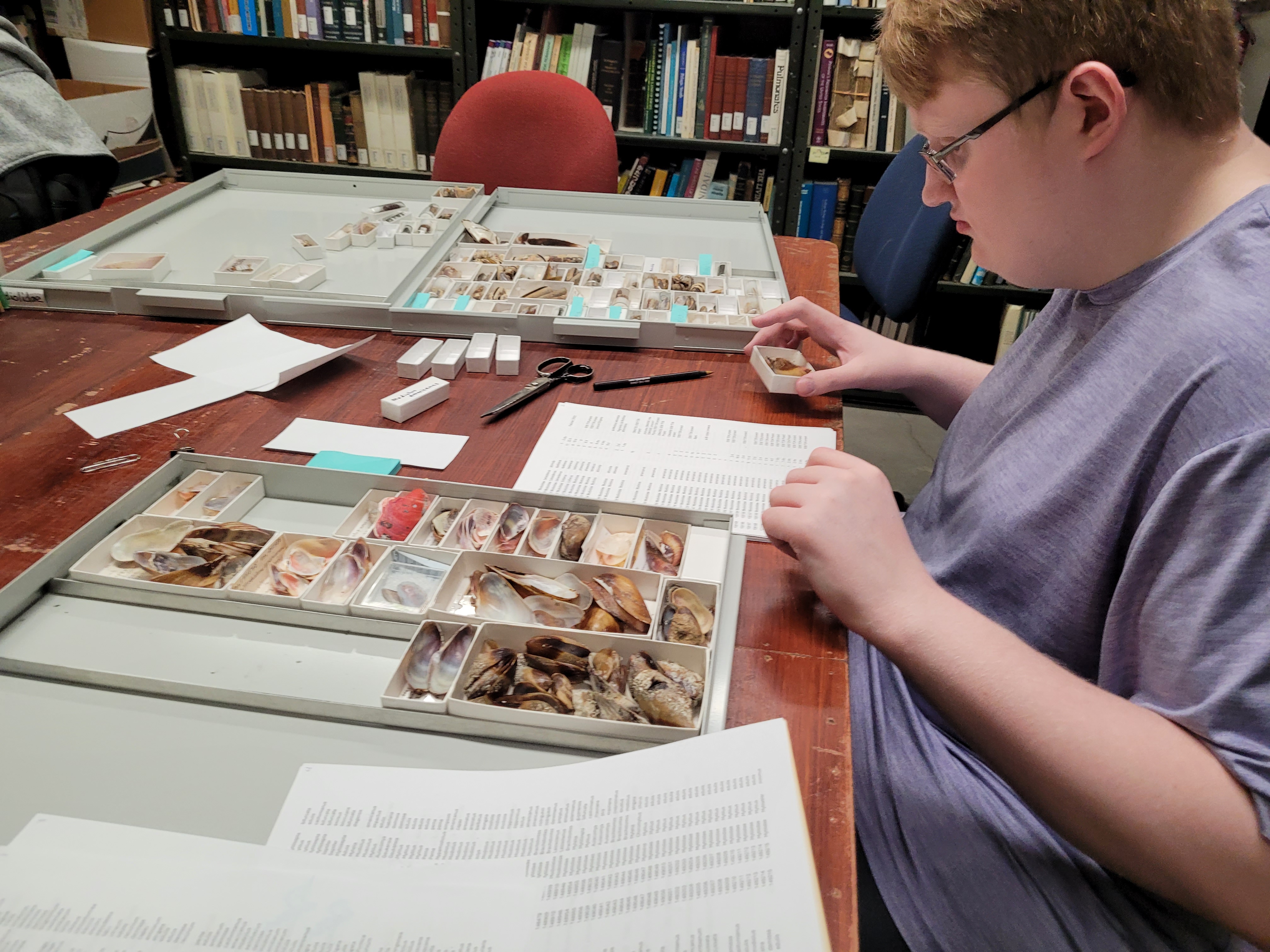
From tiny land snails to massive seashells, my time in the Mollusks department at the Carnegie Museum showed me just how much goes into their upkeep. It’s not enough to simply collect and display these beautiful specimens; they require constant care, organization, and accuracy. My tasks often focus on reorganization, ensuring each specimen is in the right place and properly cataloged.
A significant portion of my work involves checking that the specimens were assigned the correct species names. Sometimes, species classifications change based on new research or updated understandings of evolutionary relationships. When that happens, my job is to adjust the labels and update the records to reflect the current, scientifically accepted names. This is crucial not just for accuracy but also for the future accessibility of the collection.
Reorganizing the collection is another key aspect of my role. As the collection grew and new specimens were added, sometimes things got disorganized. With it being important to make sure everything was in its proper place, easy to access, and correctly documented, I often find myself carefully comparing old and new records, sometimes moving specimens to different sections and giving them new labels after a family is fully updated. This process is meticulous but essential for keeping the collection in order.
Labeling might seem like a simple task, but it’s much more than that. Each shell has a story to tell: where it was found, when it was collected, and sometimes even who discovered it. An accurate label ensures that all this information is preserved for future study. Researchers from around the world rely on the details in these records, and a single mistake can complicate or delay their work. Whether I am adding new specimens or correcting outdated information, it is important to ensure that every label is as accurate and detailed as possible.
While it may not be a job people often think about, maintaining these records and labels is essential for the museum’s long-term success. The work I do isn’t just about keeping the collection neat; it is about preserving the integrity of scientific research. Without proper organization and documentation, the valuable information locked in these shells would be difficult to access or, even worse, at risk of being lost entirely.
In the end, the work I do may not be visible to visitors, but it plays a crucial role in keeping the museum’s collection intact and accessible. Whether it is re-labeling specimens, reorganizing drawers, or updating species names, every cataloguing task contributed to the larger mission of preserving knowledge for future generations of researchers and visitors alike. It’s a reminder that the real value of a museum isn’t always in the exhibits you see. It’s in the careful, unseen work that goes into keeping that history alive.